

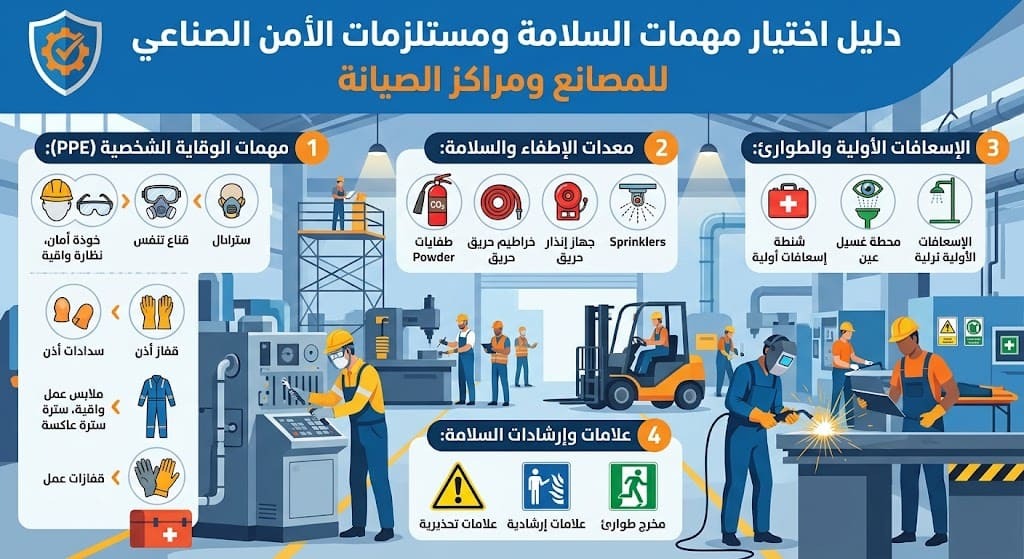
Industrial safety supplies are essential for factories, maintenance centers, engineering workshops, and construction sites. They play an important role in workplace risk management, protecting employees and equipment, and supporting operational continuity.
Industrial safety is not limited to providing workers with safety helmets and protective footwear. It also involves selecting appropriate personal protective equipment (PPE), securing work areas, and providing fire protection and alarm systems according to the hazards present within each facility.
For procurement managers, factory managers, maintenance engineers, and occupational safety professionals, selecting the right safety equipment requires an understanding of industrial processes, potential exposure risks, equipment specifications, and suitability for daily operations.
VIP Tools for Trading and General Supplies offers various industrial product categories and safety supplies that businesses can inquire about based on their requirements. Visit the Industrial Safety and Supplies section to explore the available product categories.
What Are Industrial Safety Tools?
Industrial safety tools are equipment and protective measures designed to reduce workplace hazards, protect employees from potential injuries, and make working environments safer against mechanical, electrical, thermal, and other industry-related risks.
These tools include personal protective equipment (PPE), fire protection equipment, warning and traffic management products, and supplies used to secure work areas. The selection of each category should be based on an actual workplace risk assessment rather than purchasing the same set of products for every employee.
For example, a welder has different safety requirements from an electrician or a warehouse worker. Welders need suitable protection against sparks, heat, and welding radiation. Electricians require equipment specifically rated for the electrical hazards they may encounter, while warehouse workers need protection appropriate for material handling and moving equipment.
It is also important to understand that personal protective equipment does not replace measures designed to control hazards at their source, such as machine guards, ventilation systems, and safe isolation and maintenance procedures. Instead, PPE forms part of a comprehensive occupational safety system.
Types of Industrial Safety Supplies and Their Applications
Industrial safety requirements vary according to the nature of a facility and its operating risks. The following are some of the main categories required by factories, maintenance centers, and manufacturing workshops.
1. Personal Protective Equipment (PPE)
Personal protective equipment is used to reduce employees’ exposure to hazards that cannot be adequately eliminated through engineering and administrative controls alone. PPE must be selected according to a workplace risk assessment and the technical specifications required for each application.
Key products include:
- Industrial Safety Helmets: Protect the head against specific hazards, such as falling objects and impacts, when the appropriate helmet type is selected.
- Safety Shoes: Help protect the feet against impact, slipping, and sole penetration, depending on the required safety classification.
- Industrial Protective Gloves: Available in different types for protection against cuts, abrasion, heat, chemicals, and electrical hazards.
- Safety Glasses and Face Shields: Help protect the eyes and face against flying particles, sparks, splashes, and other relevant hazards.
- Respiratory Protection Equipment: Selected according to the type and concentration of contaminants and the conditions of exposure.
- High-Visibility Vests: Improve worker visibility in areas with moving vehicles and machinery, particularly in warehouses and construction sites.
- Hearing Protection Equipment: Includes earplugs and earmuffs for workplaces where noise exposure requires hearing protection.
Industrial PPE should not be purchased based on appearance or price alone. Buyers should verify the actual protection level, correct fit, compatibility between equipment used together, and suitability for extended daily use.
Explore the available categories on the Personal Protective Equipment (PPE) page.
2. Firefighting and Fire Protection Equipment
Fire protection equipment is an essential part of safety preparations in factories, maintenance centers, and warehouses, especially in areas containing flammable materials, electrical equipment, or processes that generate heat and sparks.
This category includes:
- Fire Extinguishers: The extinguishing agent and capacity should be selected according to the anticipated fire class and the materials present at the site.
- Fire Hoses: Used to deliver water from designated supply points to firefighting locations in accordance with the system requirements.
- Fire Valves and Accessories: Used to operate fire protection networks and control water flow.
- Fire Alarm Systems: Help detect fires and provide warnings according to the system design.
- Fire Blankets and Safety Accessories: Used in applications appropriate to the specific hazard and operating instructions.
One common mistake is selecting a single type of fire extinguisher for every area of a facility without assessing the hazards. Equipment suitable for ordinary combustible materials may not be appropriate for flammable liquid fires or electrical equipment fires.
Facilities should therefore identify potential fire classes, position equipment appropriately, and arrange regular inspection and maintenance in accordance with applicable requirements.
3. Safety Accessories and Workplace Area Management
Industrial safety is not limited to equipment worn by employees. It also involves preparing the workplace with clear visual warnings and tools for managing pedestrian and vehicle movement.
Key supplies include:
- Traffic Cones and Warning Barriers: Used to mark maintenance areas, temporary work zones, and designated routes.
- Warning Tape: Helps restrict access to designated areas or direct workers away from hazards.
- High-Visibility Vests: Improve worker visibility in warehouses, construction sites, and areas where machinery is moving.
- Safety Signs and Warning Boards: Communicate hazards, PPE requirements, and the locations of emergency equipment.
- Hazard Warning Devices: Help identify areas that require special precautions.
These products support clear safety instructions and reduce confusion during operations. However, they do not replace engineering barriers or required isolation systems where actual hazards are present.
Explore Safety Accessories to learn more about products used to secure and organize work areas.
How to Choose the Right Industrial Safety Supplies for Your Factory
For procurement managers and factory managers, choosing the right industrial safety supplies should begin with identifying workplace hazards and operational requirements, then matching products to those needs.
1. Identify the Nature of the Work and Its Hazards
Start by dividing the facility into work areas, such as production lines, welding workshops, electrical rooms, storage areas, and maintenance departments.
Next, identify the hazards in each area, including sparks, heat, dust, noise, chemicals, falling objects, and moving equipment.
This assessment helps determine the PPE required for each job instead of distributing the same products to all employees.
2. Review Equipment Technical Specifications
Verify that each product is suitable for the specific hazard and that its technical data and certifications, where applicable, meet the required specifications.
Examples include glove protection ratings, safety footwear specifications, eye protection levels, and the type of filter used in respiratory protection equipment.
A product described as “industrial grade” or “high quality” is not necessarily suitable for a particular task. Always review the manufacturer’s technical specifications and instructions.
3. Consider Actual Operating Conditions
Safety requirements differ between a clean indoor environment and a workplace exposed to oils, heat, moisture, dust, or intensive use.
Consider material durability, worker comfort, available sizes, ease of cleaning, and expected service life. Compatibility between different PPE items must also be checked, as incompatible equipment may reduce the overall level of protection.
4. Evaluate the Supplier Technically and Commercially
When comparing quotations, do not rely on the initial purchase price alone. Review the clarity of product specifications, availability of the required sizes and quantities, the supplier’s ability to support recurring orders, available conformity documentation, and applicable delivery and warranty terms.
For factories that regularly consume PPE, advance inventory planning can help reduce shortages of essential safety products and support safer operations.
5. Establish an Inspection and Replacement Plan
Industrial safety supplies require regular monitoring to ensure that they remain fit for use.
Damaged equipment, expired products, and items that no longer provide the required level of protection should be replaced according to the manufacturer’s instructions and the facility’s procedures.
Employees should also receive training on correct use, cleaning, and storage. Inspection and replacement activities should be documented whenever required by the facility’s safety management system.
Industrial Safety Supplies for Maintenance Centers and Manufacturing Workshops
Maintenance centers face different challenges from continuous production lines. Their tasks may include disassembly, installation, welding, cutting, using electrical and mechanical tools, and handling oils and cleaning chemicals.
A maintenance center’s safety plan should therefore address the following requirements:
- During Welding and Cutting: Use appropriate eye and face protection, gloves, and clothing designed for spark and heat hazards, while securing the surrounding work area.
- During Mechanical Work: Select gloves, eye protection, and safety footwear according to the actual hazards. Avoid equipment that could become entangled in rotating machinery.
- During Electrical Work: Use equipment specifically rated for the relevant electrical hazard, and follow energy isolation procedures to verify that power sources have been safely disconnected before maintenance.
- During Cleaning and Chemical Handling: Review the chemicals’ safety data sheets and select appropriate hand, respiratory, and eye protection.
- During Equipment Movement: Establish clear movement routes, use suitable warning devices, and enforce the required PPE rules.
Providing safety equipment alone is not enough. Safety managers must also ensure that technicians understand how to use the equipment correctly and recognize its limitations.
Where to Buy Industrial Safety Supplies in Egypt: How to Choose the Right Supplier
When searching for industrial safety supply stores or safety equipment suppliers in Egypt, procurement managers need a supplier who can understand their facility’s requirements and provide products with clear specifications, rather than simply offering a range of items without guidance on their intended applications.
Important factors to consider when selecting a supplier include:
- Product Range: Availability of PPE, firefighting supplies, and safety accessories to support the facility’s requirements.
- Clear Specifications: Access to technical information that can be reviewed against workplace safety requirements.
- Product Reliability: Verification of product origin and the relevant technical documentation or conformity certificates, where required.
- Quantity and Size Availability: Particularly important for factories that require recurring supplies or need to equip large workforces.
- Transparent Supply Terms: Clear agreement on quantities, delivery schedules, prices, replacement conditions, and warranty terms, where applicable.
- Effective Communication: The ability to submit a clear requirements list and receive an organized quotation that supports purchasing decisions.
Businesses can contact VIP Tools to inquire about industrial safety supplies through the Industrial Safety and Supplies section.
Companies setting up a new factory or reorganizing their safety inventory should prepare a list of required products, including quantities, applications, and technical specifications. This makes it easier to review purchasing requirements and obtain a more accurate supply quotation.
Personal Protective Equipment Suppliers: What Should They Offer Factories?
When comparing personal protective equipment suppliers, businesses should focus on the supplier’s ability to meet industrial purchasing requirements clearly and consistently.
A factory purchasing hundreds of pairs of safety shoes or large quantities of protective gloves needs more than the products themselves. It also requires suitable sizes, specifications that match workplace conditions, quantities that can be planned in advance, and technical information that helps the safety department approve the selected products.
It is advisable to prepare a purchasing request that includes the product name, intended application, required specifications, sizes, quantities, and delivery location. This can make supplier quotations easier to compare and reduce the risk of purchasing similar-looking products with different protection levels.
Buyers should also review product instructions for use, replacement, and storage. Products within the same category do not necessarily provide the same protection. For example, gloves designed for cut resistance are different from gloves intended for chemical resistance or electrical protection.
Why Choosing the Right Industrial Safety Supplies Is an Investment in Operations
Safety management helps facilities maintain an organized working environment and reduce exposure to occupational hazards.
Selecting unsuitable PPE can create a false sense of security, reduce employee compliance, or lead to premature equipment replacement.
By contrast, selecting products based on risk assessments and technical specifications can help facilities:
- Match protective equipment more closely to job requirements.
- Support the implementation of safety procedures across production lines and workshops.
- Reduce exposure to preventable workplace hazards.
- Improve purchasing processes and PPE inventory management.
- Increase employee awareness of correct equipment use.
- Support operational continuity through better risk management.
However, purchasing industrial safety supplies alone cannot guarantee the prevention of accidents. Effective safety depends on workplace design, appropriate safety procedures, employee training, maintenance, and continuous monitoring.
Industrial Safety Supplies for Factories and Businesses from VIP Tools
Factories and maintenance centers need a supplier that understands industrial purchasing requirements and can help them identify suitable products according to their specifications and purchasing lists.
VIP Tools for Trading and General Supplies offers various industrial safety product categories, including personal protective equipment, safety accessories, and firefighting supplies, alongside other equipment and tools for factories, workshops, and maintenance centers.
Whether you are a procurement manager sourcing safety equipment for employees, a factory manager updating your PPE inventory, or a maintenance center manager looking for products suitable for welding and mechanical work, defining your technical requirements and quantities in advance can help you obtain a more accurate supply quotation.
Contact VIP Tools to inquire about available industrial safety supplies and personal protective equipment, and request a quotation based on your business requirements.
- Website: https://viptools-eg.com/
- Phone: 01101230131
- Email: vip.for.trading24@gmail.com
- Showroom: 103 El Gomhoreya Street, Kadry Market, Cairo, Egypt.
Frequently Asked Questions About Industrial Safety Supplies
What Are the Essential Industrial Safety Tools for Factories?
Essential industrial safety supplies include safety helmets, safety shoes, protective gloves, safety glasses, hearing and respiratory protection where required, firefighting equipment, warning signs, traffic cones, and warning tape. The final selection depends on the facility’s activities and workplace risk assessment.
What Is the Difference Between Industrial Safety and Personal Protective Equipment (PPE)?
Industrial safety is a broader concept that includes risk management, machine and workplace protection, safe operating procedures, and emergency preparedness.
Personal protective equipment, on the other hand, refers to equipment worn or used by workers to reduce exposure to specific hazards, such as helmets, gloves, safety glasses, and protective footwear.
How Do I Choose the Right PPE for Employees?
Start by identifying the hazards associated with each job, then select equipment specifically designed and rated for those risks. Review fit, comfort, technical specifications, and compatibility between PPE items. Ensure that employees are trained in proper use, inspection, and replacement procedures.
Where Can I Buy Industrial Safety Supplies in Egypt?
Businesses can search for industrial safety suppliers and compare product specifications, quantities, and supply terms before making a purchasing decision.
Companies can also contact VIP Tools to inquire about PPE, firefighting equipment, and safety accessories through the Industrial Safety and Supplies page.
What Safety Equipment Is Essential for Welding Workshops?
Appropriate welding safety equipment may include welding helmets or masks with the correct protection rating, eye and face protection, gloves and clothing designed for spark and heat hazards, and suitable safety footwear.
The work area must also be secured, with appropriate ventilation and fire protection measures based on the specific operation.
How Can I Verify the Quality of Industrial Safety Supplies Before Purchasing?
Review the manufacturer’s information and technical specifications. Where applicable, verify conformity certificates or required approvals, and assess the product’s construction, fit, and suitability for its intended application.
Do not rely on price or marketing descriptions alone to determine the level of protection provided.
Can Industrial Safety Supplies Be Ordered in Bulk for Factories and Businesses?
Businesses can contact suppliers to inquire about product availability, quantities, delivery schedules, and supply terms.
Preparing a list of required products, specifications, sizes, and quantities can help suppliers provide a more accurate quotation for the facility’s needs.
Technical Sources and References
The general guidance in this article is based on specialized occupational safety and PPE resources. The following references provide further information on risk assessment, equipment selection, and workplace protection.
1. Occupational Safety and Health Administration (OSHA) — Personal Protective Equipment
A reference for understanding personal protective equipment and the requirements for selecting and using it in workplace environments.
2. OSHA — Hazard Assessment and PPE Selection
A reference explaining workplace hazard assessment and the selection of appropriate personal protective equipment.
3. National Institute for Occupational Safety and Health (NIOSH) — Personal Protective Equipment
A specialized resource covering personal protective equipment, including respiratory protection and related safety information.
4. NIOSH — About Personal Protective Equipment
Additional information on the use and selection of personal protective equipment as part of workplace hazard prevention.
Note: These are international guidance resources. Businesses should also consult applicable Egyptian laws, regulations, and technical standards when determining the safety requirements for their industrial facilities.